Storm damage
Shingles in the yard? Find out what the storm did first
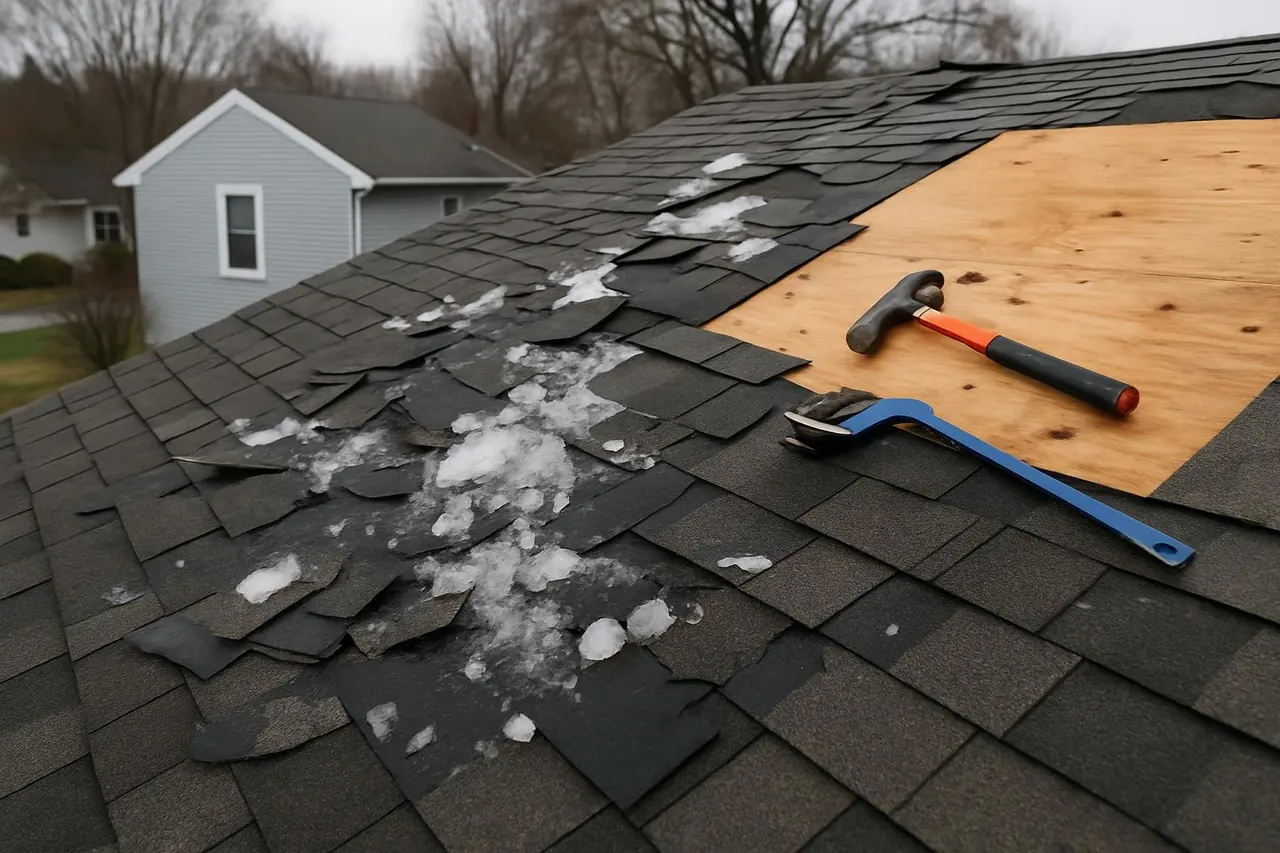
Shingles in the yard after a storm do not tell you how much roof was hurt. Stay on the ground, photograph what you see, and ask for an independent roofer to look at the roof and write down what the storm did. Then you decide whether you need a repair or something larger.
What we do
Describe the roof in a few lines, and an independent roofing contractor comes out to look at it, then prices the work for you in writing.
What we promise while you decide
- No charge from us, whether you book or not.
- The roofer's price comes to you on paper first.
- You may ask for a repair price beside the replacement one.
- Credit terms are spelled out on our Terms page.
Workmanship and contract terms belong to the roofer you hire.
Signed Roof Replacement Syracuse, (315) 640-3590
Read the full termsThe storm sorter
What did the storm do?
Wind
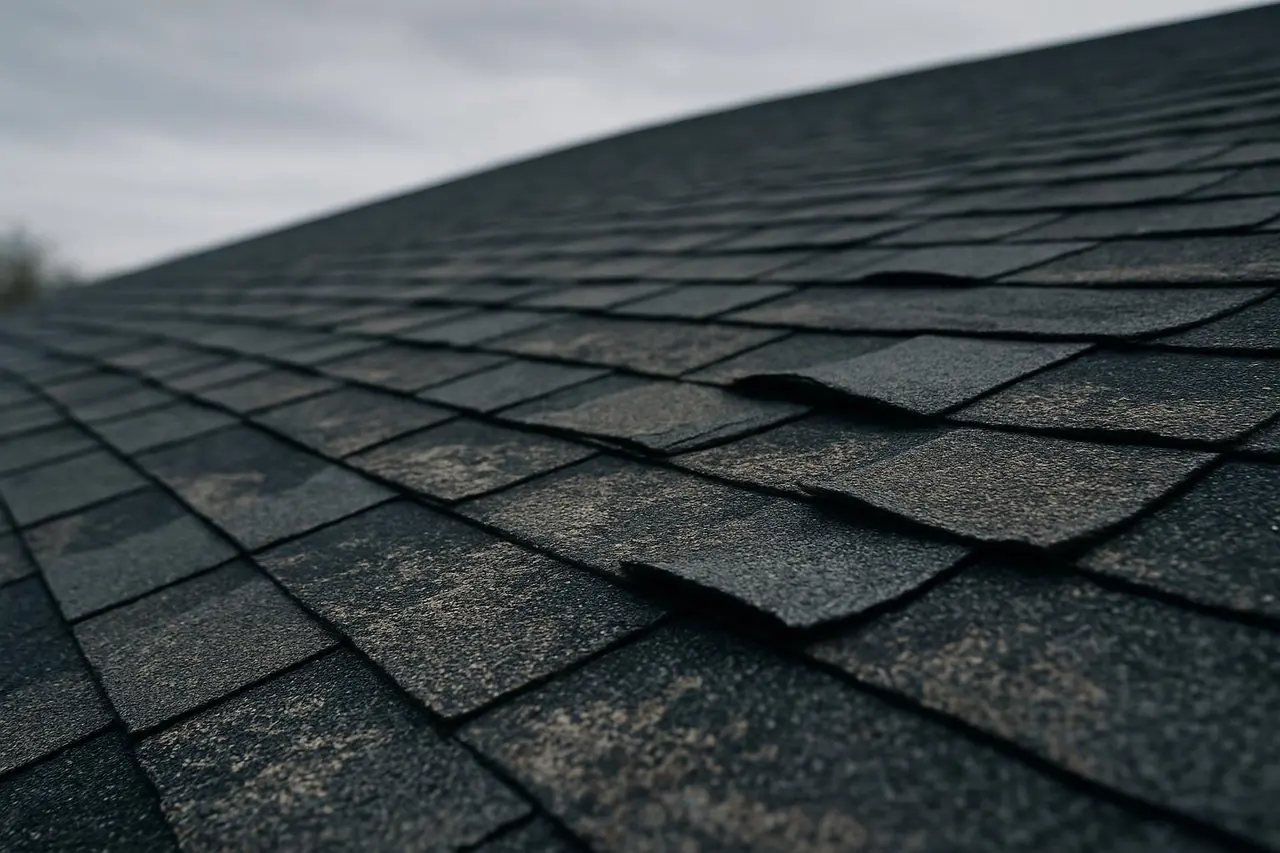
You are hereShingles in the yard and tabs standing up are what wind leaves behind. County records show wind events most years.
PhotographEach slope and the yard, from the ground.
AskIs this a section repair or a new slope?
Hail
Whether hail hurt a roof is the roofer's call. Ask what they see on each slope.
PhotographDents on metal, bruised tabs, any hailstones.
AskWhat do you see on each slope, in writing?
Ice storm
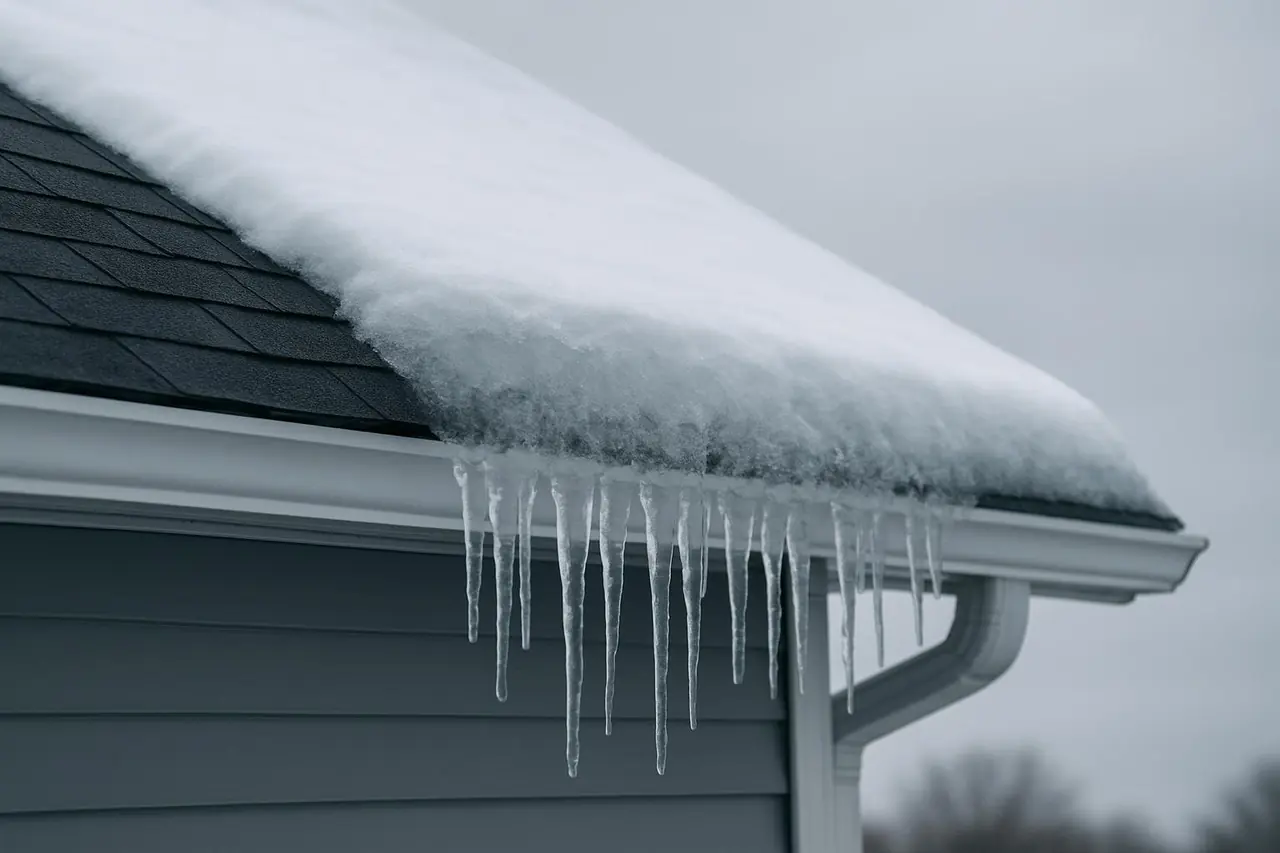
Ice can load a roof and drop limbs on it. The eave takes the weight first.
PhotographThe eave edge and any broken limbs.
AskDid the ice hurt the eave detail or only the shingles?
Limb on the roof
A limb can bruise shingles and the deck under its landing point. Leave it for the roofer.
PhotographThe limb, and the spot under it.
AskWhat is under the spot where it landed?
Questions
Ask these before you call it a new roof after a storm
What should I do first after a wind storm?
Stay off the roof and look from the ground. Photograph shingles in the yard, any limb and each side of the house, and write down the date. Then ask a roofer what the storm did.
Does every storm mean a new roof?
No. Many storms lift or tear a few shingles, and some do more. Ask the roofer to describe the damage slope by slope, and to give you the repair price beside any larger one.
How do I know if hail hurt my shingles?
A roofer has to look. Dents on metal around the house are clues, not proof. Ask what they see on each slope and ask for it in the written estimate.
Can I leave a limb on the roof?
Leave it for the roofer. Climbing up with ice or a heavy limb is risky. Photograph it from the ground and ask what is under the spot where it landed.
Will the estimate help with my insurer?
It describes the work and the price. Your insurer decides what applies under your policy, and we never handle a claim. Ask your insurer which papers it wants from you.
Is a contract signed at the door binding?
Under state law the contract has to be written, and the contract must tell you about your three business days to cancel. Ask for the written contract first, and ask where a deposit would be held.
Timing
How the timing of the damage changes the job
After a wind or storm
Wind leaves lifted tabs, creases and shingles on the ground. Ask the roofer whether the damage is a section or a slope, and what shows on the layer beneath.
Only in a thaw
A stain that shows only after a thaw may be an eave problem that the storm made worse. Ask the roofer to say which is which, so the storm is not blamed for old wear.
No leak, old roof
No stain does not mean no damage. Ask the roofer to look at the slopes the wind faced, and to say in writing what they did and did not find.
In every rain
A new stain in every rain after a storm is worth telling the roofer about first. Ask what they found before they price the fix.
Tell-tales
Signs a storm touched the roof
Shingles or pieces in the yard
Keep them where they fell and photograph them. They show what came off and from which side.
Tabs lifted or creased
From the ground, look for tabs that stand up or fold. Note which slope, and write down the date.
A limb on or against the roof
Do not climb up to move it. A limb can mark the shingles and the deck under the spot where it landed.
Dents on metal around the house
Dents on a vent cap or a garage door can point to hail. Whether hail hurt the shingles is for the roofer to say.
A new stain on a ceiling inside
Photograph it and note the date. Ask the roofer to say whether it came from the storm or was already there.
Scope
What storm work takes in
A look at every slope
The roofer checks each slope, not only the one you noticed. Ask for a note on each.
Repair of damaged shingles
Torn, lifted or missing shingles are replaced or re-sealed. Ask for the count and the area.
Deck and layer check
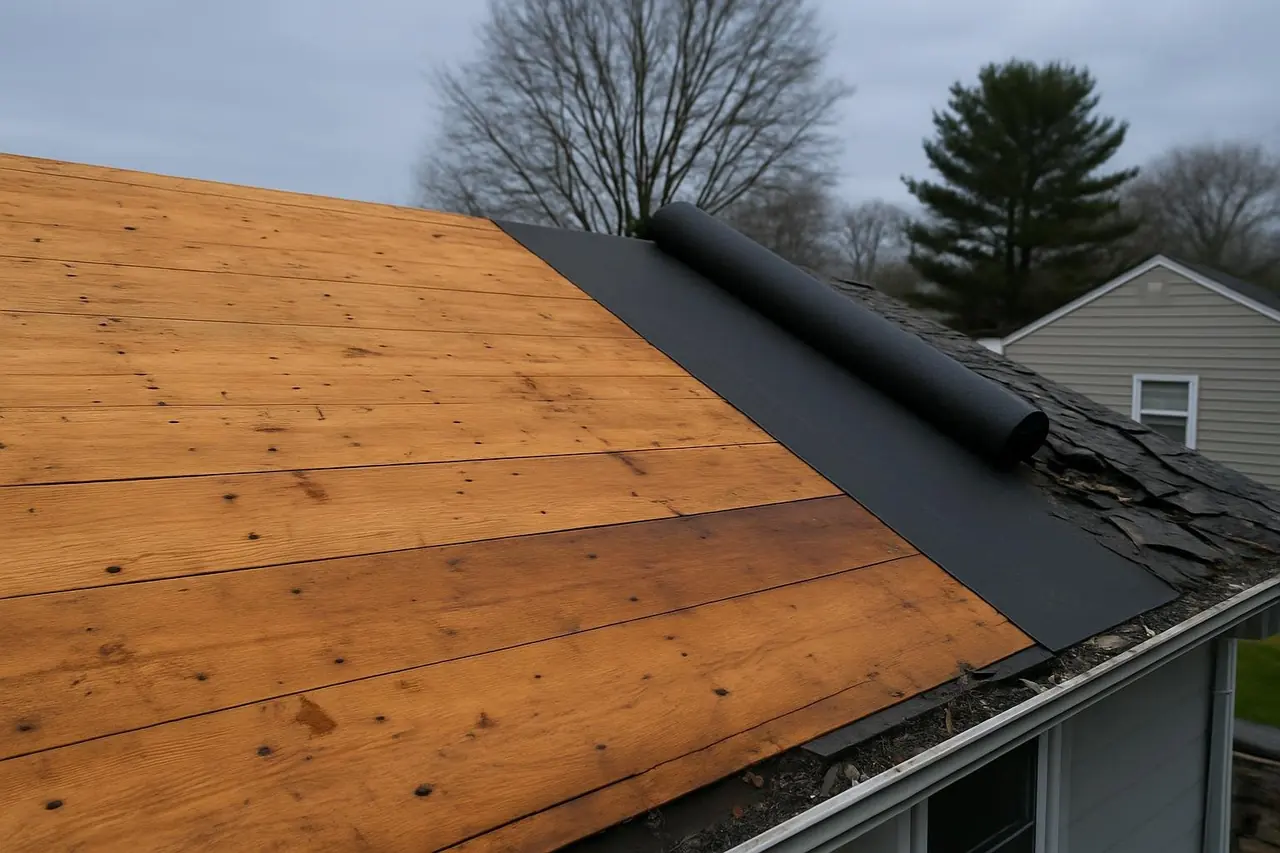
Where a limb or a lifted section exposed the roof, the roofer looks at the wood. Ask what they found.
A larger job, if the damage is wide
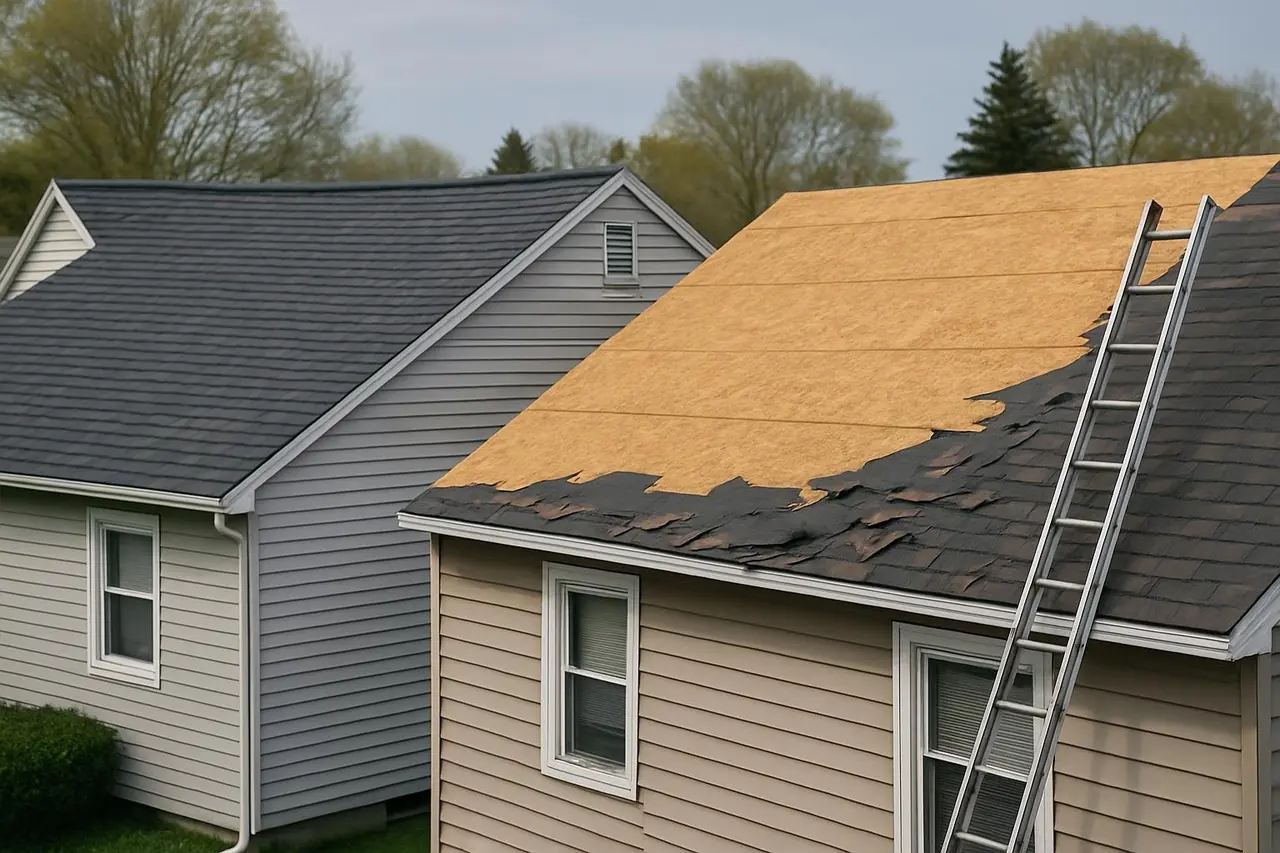
When the damage covers several slopes, the estimate may become a replacement. Ask the roofer to explain why.
A plain separation of old and new damage
A fair estimate says what the storm did and what was already worn.
Sequence
The storm job, step by step
Record it
Photograph from the ground, note the date and the storm, and keep any fallen pieces.
A roofer looks
An independent roofer looks over the roof and tells you what the storm did.
You read the estimate
It should separate storm damage from wear, and say what each part costs.
You decide
Read it next to your policy, then book only if it fits.
Before you file anything with your insurer
We never handle a claim, and we are not telling you to file or not to file. The state's consumer guide cautions that several small claims in a short span can make some carriers limit your cover. Read your policy, ask your insurer how your roof is treated, and then decide.
It also helps to know what a roofer's estimate is for. It describes the work and the price, and it does not settle what your insurer pays. Read our insurance guide, and ask your insurer any question the guide leaves open.
What county records say about storms here
NOAA's storm database lists 343 thunderstorm wind events in this county from 1996 through 2025, plus 182 hail reports, so a storm that touches a roof here is not rare.
That is a reason to have a look, not a cause for alarm. Ask the roofer what the storm did to your roof, and ask them to write the damage down, so you can compare it with what your insurer asks for.
Take your time when someone knocks
After a storm, strangers may offer to look at your roof. You do not have to answer the door or sign anything on the spot. A home improvement contract must be in writing, and it must tell you that you can cancel in three business days.
Ask where your deposit will be held, because the state says it must go to escrow or be backed by a bond. Run the roofer's name in the state's workers' compensation search before any money changes hands, and say no to anyone who will not wait.
A fair estimate separates the storm from old wear
Old wear should not be blamed on the storm, and real storm damage should not be waved off as age. Ask the roofer to go slope by slope and mark which damage looks new, with photos if possible.
That separation helps your own decisions and any talk with your insurer. Put your questions to the roofer at the visit, then keep the written estimate with your photos and your policy.
What to do in the week after a storm
Start from the ground. Walk around the house in daylight and look for shingles in the yard, bare patches, creased tabs and limbs near the roof. Take dated photos, note the weather and stay off the roof. Then ask for a roofer's visit and tell us what you saw.
If the house is open to the weather, ask the roofer how they will keep it dry in the meantime. A tarp is short-term cover, not a repair, so ask who puts it up and what comes next.
Water coming through near a light fitting needs an electrician before anyone touches the fixture. Stay away from any downed wire and call the utility.
In writing
What a storm estimate should spell out
What the storm did, slope by slope
A note on each slope, so the damage is described and not guessed.
What was already worn
A plain line for older wear, so the two are not mixed together.
The work and the materials
Repair or replace, with the products named.
The price and the paper
The price, any permit, dates and the cancel notice.
Cost drivers
What moves the price after a storm
- How many shingles the storm damaged, and across how many slopes.
- Whether the deck beneath was exposed or marked.
- How steep the roof is and how hard it is to reach.
- Whether old wear sits beside the new damage and must be priced apart.
- Whether your place requires a permit for the work.
- What the insurer's rules say about repair or replacement, which you read in your own policy.
Look, estimate, choose
Look, estimate, choose
Three steps, and the last one is yours.
- 01
A roofer looks
An independent roofing contractor visits and looks at the roof.
- 02
They write it up
You get a written estimate for the work they would do.
- 03
You weigh it
Set it beside any other estimate you hold. Decide in your own time.
Places
Storm damage pages by place
Guides
More on storms and the policy
Will your insurer pay for a roof in Onondaga County?
The state's own words on actual cash value
Ask what the storm did to yours.