Ice dams
Icicles on the edge and a stain in a thaw? Start at the eave
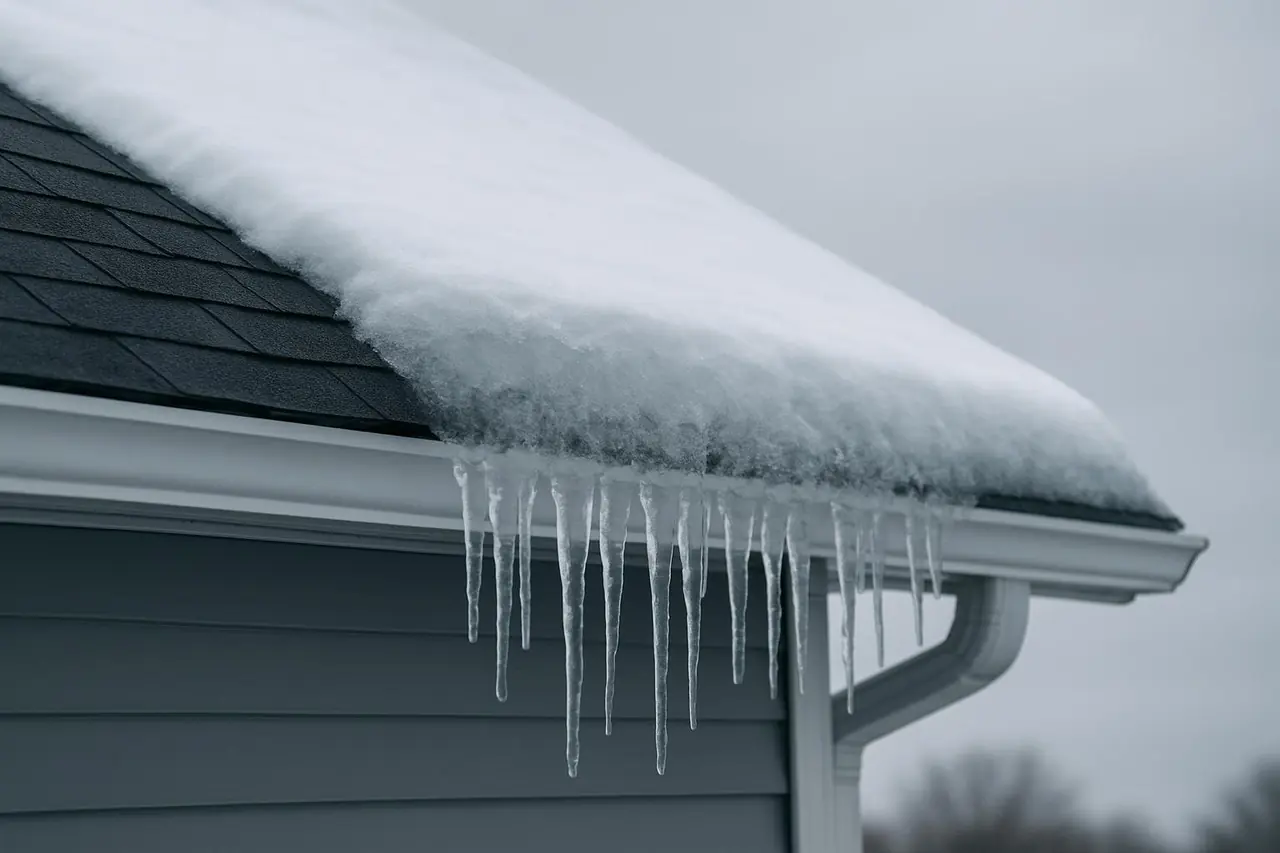
Icicles along the edge and a ceiling stain that appears in a thaw send many owners straight to a quote for a new roof. Start at the eave instead. Ask an independent roofer to look at the edge, the ice barrier under it and the wood below, and to write down what each part needs.
What we do
Describe the roof in a few lines, and an independent roofing contractor comes out to look at it, then prices the work for you in writing.
What we promise while you decide
- No charge from us, whether you book or not.
- The roofer's price comes to you on paper first.
- You may ask for a repair price beside the replacement one.
- Credit terms are spelled out on our Terms page.
Workmanship and contract terms belong to the roofer you hire.
Signed Roof Replacement Syracuse, (315) 640-3590
Read the full termsThe eave, drawn
Follow the water to the edge
- 1
Shingles
Asphalt shingles shed rain but cannot stop water pushed up under them.
- 2
Warm wall
Heated rooms below leave the roof deck warm above the wall.
- 3
Cold overhang
Past the wall, the deck is cold, so melt from above freezes there.
- 4
Meltwater
Water crosses freezing on many days here, so ask what the edge does on those days.
- 5
Ice dam
Frozen melt along the edge walls off the water still running down.
- 6
Backup
Trapped water finds the gaps between shingles and soaks in.
- 7
Ice barrier
The code asks for it where ice forms along the eaves. Ask how it applies to your address.
- 8
Drip edge
Ask for it by name. It is a small line that is easy to drop.
- 9
Deck
The wood under the dam is where the damage hides. Get a unit price for bad wood.
Questions
Ask these before the eave is priced
Do icicles mean I need a new roof?
Not by themselves. Icicles show that water is melting and refreezing at the edge. Ask a roofer to look at the eave and the wood below, and to give you the eave price beside any larger one.
Why does the stain only show in a thaw?
A thaw melts snow that then refreezes at the cold edge and backs up under the shingles. That is the pattern the DOE describes. Note the dates, and tell the roofer.
What is an ice barrier?
It is a sticky sheet, or two cemented layers, that goes under the shingles at the eave. The state code asks for one where ice has a history of forming. Ask the roofer to name it and its reach.
Can I chip the ice off myself?
Leave it alone. Chipping can damage shingles, and climbing up is risky in winter. Photograph the edge from the ground and ask a roofer what to do.
Is the eave job enough, or do I need the whole roof?
That depends on what the roofer finds under the shingles. Ask for the eave price and the full replacement price on the same page, and ask what each leaves out.
Does this job fix the attic too?
No. The eave work is roofing, and the work inside the house is separate. Ask your roofer who would handle it, and keep the two prices apart.
Timing
How the timing of the stain changes the eave question
Only in a thaw
A stain that shows only in a thaw is the pattern this job is built for. Ask the roofer to start at the eave and say what is there, and whether the rest of the roof looks sound.
In every rain
A stain in every rain is a different pattern. Tell the roofer if you have both, because the eave may be one cause among several.
No leak, old roof
Icicles with no stain are still a reason to look at the edge. Ask what an ice barrier and a drip edge are doing there now, if anything.
After a wind or storm
A wind plus ice can lift tabs along the edge. Ask whether the damage is shingles above the eave or the eave detail itself.
Tell-tales
Signs the eave is where it starts
Icicles along the whole edge
A long row of icicles at the overhang is where melted snow refreezes. Photograph it from the yard in daylight.
A stain along an outside wall
A stain just inside an outside wall, and only in a thaw, points at the eave first. Note where and when.
A ridge of ice at the roof edge
A ridge is the dam itself. Do not chip at it; ask a roofer what is behind it.
Shingles lifted at the edge
Lifted shingles at the overhang can mean water has been pushed up under them. Ask the roofer to look beneath.
Soft paint or a sag near the ceiling edge
Wet wall edges can mean water got past the eave. Ask the roofer to check the deck above the spot.
Scope
What eave work takes in
A look at the eave
The roofer checks the edge, the shingles above it and what lies under them. Ask for a note on each.
An ice barrier at the eaves
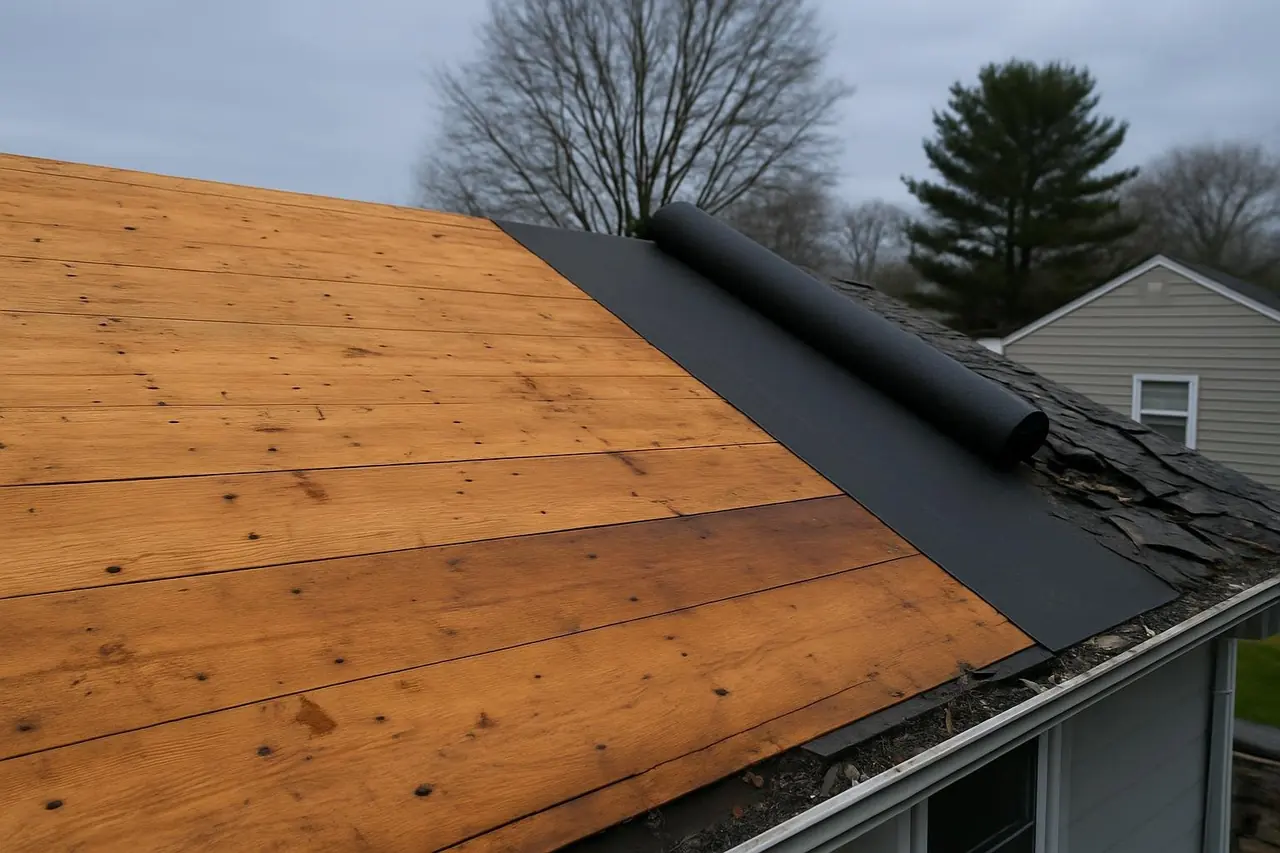
A sticky sheet or two cemented layers goes under the shingles, reaching inside the wall line. Ask for it by name and its reach.
A drip edge
Metal at the eave carries water away from the deck. Ask to see it on the list.
Repair of the deck below
Wet or soft wood at the edge is replaced. Ask for a price per sheet or board.
The shingles above
New shingles go over the ice barrier. Ask where the old ones stop and the new ones begin.
Sequence
The eave job, step by step
Say where the ice builds
Tell us where the icicles hang and where the ceiling stains.
A roofer looks at the eave
An independent roofer looks at the edge and the wood under it.
You read the estimate
It should name the ice barrier, the drip edge and any deck repair on their own lines.
You decide
Choose an eave job, a larger one or neither, once you have both prices.
Why the edge takes the damage first
Around Syracuse the temperature crosses the freezing line on about 84 days a year, and March has the most crossings. Each crossing melts snow on the warm part of the roof and refreezes it at the cold overhang. Over a winter that adds up to a lot of water pushed against the edge.
That is why the eave is the part to ask about before you accept a whole roof. Ask the roofer what is at the edge now, and what they would put there, and ask them to write both down.
Ask what the barrier is made of and how far it reaches
It is built from two cemented layers of underlayment, or from one self-adhering membrane. Ask your local office or the roofer how the code applies at your address.
Then ask the roofer for the reach in writing. A short barrier saves a little on the day and costs more when the edge fails.
What the dam did to the wood and the ceiling
Water that backs up under shingles reaches the deck. Ask the roofer whether wood that has been wet at the edge still holds nails. The same water can come through to the ceiling below, which is the stain you noticed. A roofer can see the wood only when the shingles are off, so ask for a unit price now.
Do not chip at the ice or climb up to clear it. Photograph it from the yard, and ask the roofer how they would deal with what is behind it. Keep the photos with the written estimate.
One upstream cause, and a separate job
The Department of Energy puts the upstream cause inside the house, in a fixed order of attic work. That is a separate job from the roof; ask your roofer who would do it, so the new eave is not asked to fight the same melt.
Ask for the eave job to be priced on its own, and for any larger job to be priced separately beside it. You can then decide which one fits your roof.
What your ceiling stain says about the edge
A stain near an outside wall that shows up only while snow is melting is the pattern an ice dam leaves. A stain in the middle of a room, or one that shows in every rain, tells a different story and needs a different question.
Photograph the stain with a date after each thaw, and tell the roofer if it grows. Ask them to start with the edge above it, and to price the edge work on its own line with the ice barrier and drip edge named, so you can set it beside a full replacement and choose.
A ceiling that bulges or drips by a light fixture is an electrical matter: stay out from under it, keep clear of the fixture and call an electrician.
In writing
What an eave estimate should spell out
The length of eave
Which edges are covered, so you can tell an eave job from a whole roof.
The ice barrier
What goes down, and how far it reaches inside the wall line.
The drip edge and the deck
The metal, and the price for any wood that must be replaced.
The paper around it
The permit, the dates, the payment schedule and the cancel notice.
Cost drivers
What moves the price at the eave
- How much eave the job covers, and whether it is one side or the whole house.
- How steep the roof is, because slope changes how far the ice barrier runs.
- How much deck wood at the edge proves wet or soft.
- How hard the edge is to reach, and what sits below it.
- Whether your place requires a permit for the work.
- Whether the eave is priced alone or folded into a larger job.
Look, estimate, choose
Look, estimate, choose
Three steps, and the last one is yours.
- 01
A roofer looks
An independent roofing contractor visits and looks at the roof.
- 02
They write it up
You get a written estimate for the work they would do.
- 03
You weigh it
Set it beside any other estimate you hold. Decide in your own time.
Places
Ice dam pages by place
Guides
More on the eave
Why Syracuse roofs fail at the eaves
How a March thaw builds an ice dam at the eave
Ask a roofer to look at the eave.