Guide
Before you call your insurer about the roof, read this first
Only your own policy can say whether a roof is paid for, and the cause of the damage matters too, so no website can answer for you. What this guide can do is explain the words the state uses, so you can read your own policy with confidence. We never handle a claim, and we do not tell you to file or not to file.
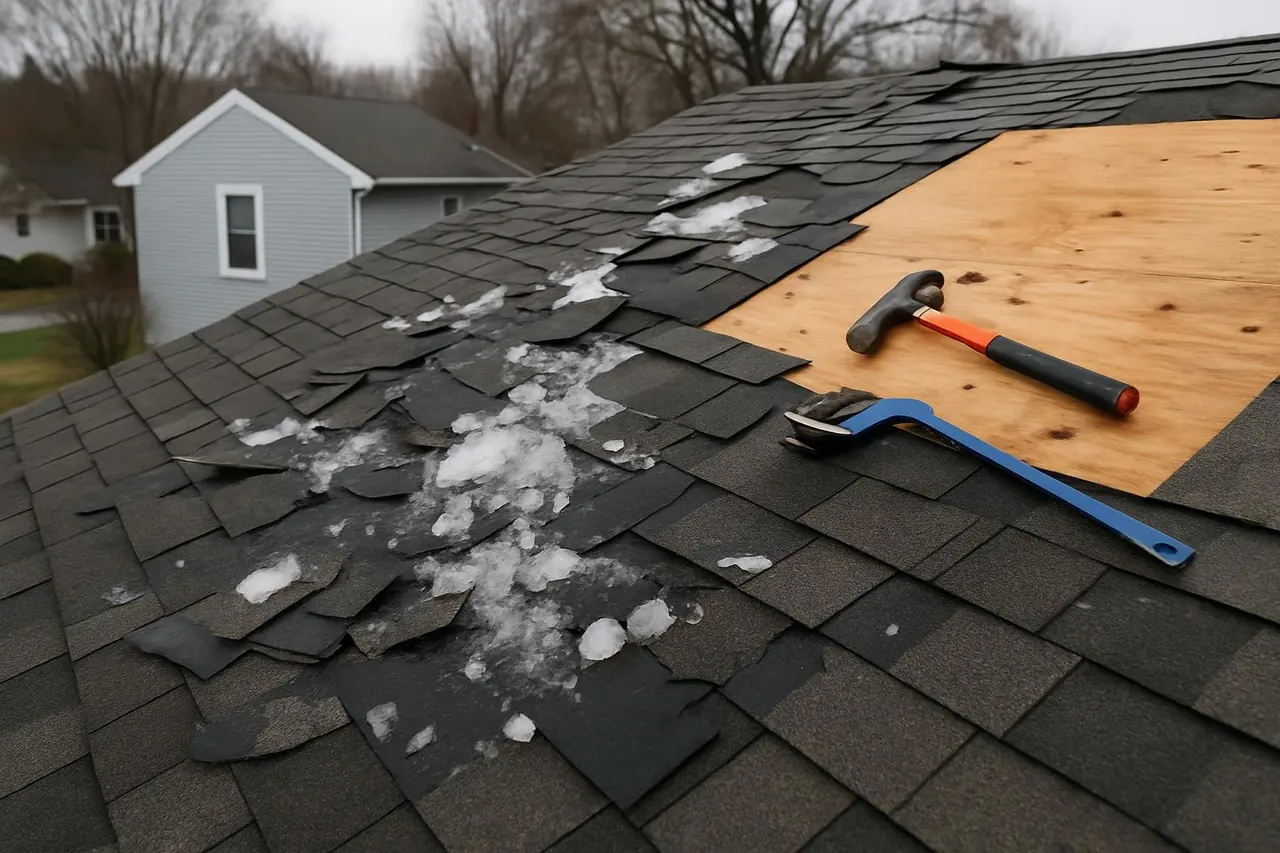
Two kinds of policy, two lists of perils
The state Department of Financial Services says a Broad Form policy, called HO-2, adds the weight of ice, snow and sleet to the basic perils. A Special Form policy, HO-3, covers all risks except those it specifically excludes. Which one you hold decides how the question is asked.
Find the declarations page near the front of your policy and read the form name, the coverage amounts and the deductibles. Then ask your insurer, in writing if you can, which perils apply to a roof like yours, and whether ice-weight damage from an ice dam falls under the wording. Keep the answer with your photos.
Actual cash value and replacement cost
Actual cash value is replacement cost less depreciation for age. Replacement cost is what it takes to fix the roof with new materials. The state's own example makes the gap plain, and the table below sets out its figures.
The example roof is 15 years old with an assumed 25-year life, so its actual cash value is $2,000 against a $5,000 repair. Depreciation shrinks what a policy pays. Ask your insurer which of the two your policy uses for roofs, and ask how it counts age.
The table
Actual cash value, in the state's own example
Read your policy for its terms. These rows come from the state's worked example.
| Replacement cost | The cost to fix the roof with new materials. The state's example puts it at $5,000. |
|---|---|
| Actual cash value | Replacement cost less depreciation for age. In the example, that is $2,000. |
| Depreciation | The example assumes the roof is used up over 25 years. That is an insurer's schedule, not a test of your roof. |
| The 80 percent rule | With coverage at 80 percent of replacement cost, a loss is paid with no deduction for depreciation. At 50 percent, the example pays $3,125. |
The storm sorter
What did the storm do?
Wind
PhotographEach slope and the yard, from the ground.
AskIs this a section repair or a new slope?
Hail
PhotographDents on metal, bruised tabs, any hailstones.
AskWhat do you see on each slope, in writing?
Ice storm
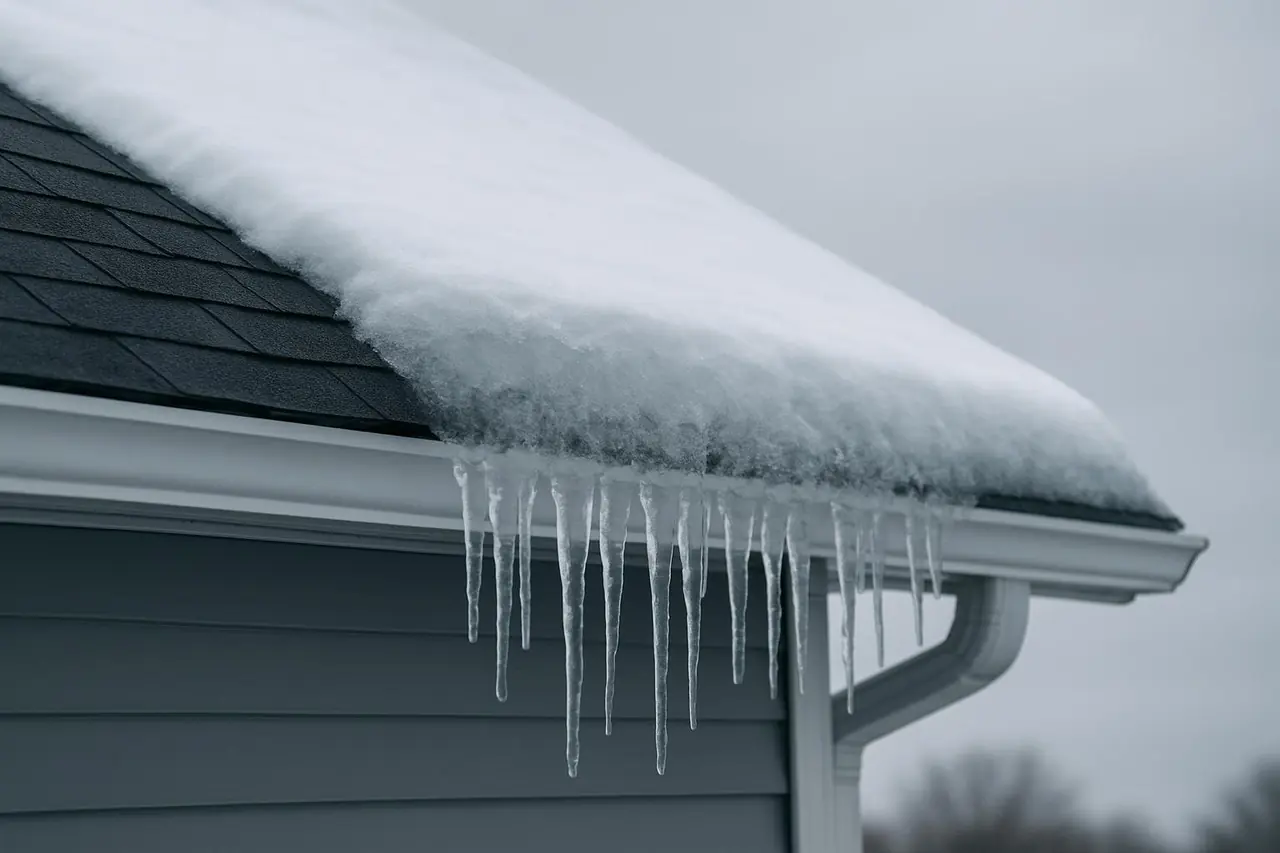
PhotographThe eave edge and any broken limbs.
AskDid the ice hurt the eave detail or only the shingles?
Limb on the roof
PhotographThe limb, and the spot under it.
AskWhat is under the spot where it landed?
The 80 percent rule
The state's guide says that if you insure the home for at least 80 percent of its replacement cost, a loss is paid at replacement cost with no deduction for depreciation. In the same example an owner covering the home at 50 percent of replacement cost receives $3,125 on the $5,000 repair because of a co-insurance penalty.
Check the coverage amount on your policy against what it would take to rebuild your home. If you are unsure of the figure, ask your insurer or agent. It is a question about your policy, and it is worth asking before a loss.
Several small claims can add up
The state warns that filing several small claims in a short time can lead some carriers to treat you as a higher risk, which may end in non-renewal. That is a reason to understand your options before you file, not a reason to hide damage. Ask your insurer how it counts claims, and write down what you are told.
What a roofer's estimate is for
An independent roofer's written estimate describes the work they would do and the price. It does not decide what your insurer pays. Your policy does that. If your insurer asks for a document, ask the insurer exactly what it needs, then ask the roofer whether they can supply it.
We book the roofer's visit, and we do not file, negotiate or manage a claim. Keep that boundary clear in your head, and in any conversation.
Wear is not storm damage
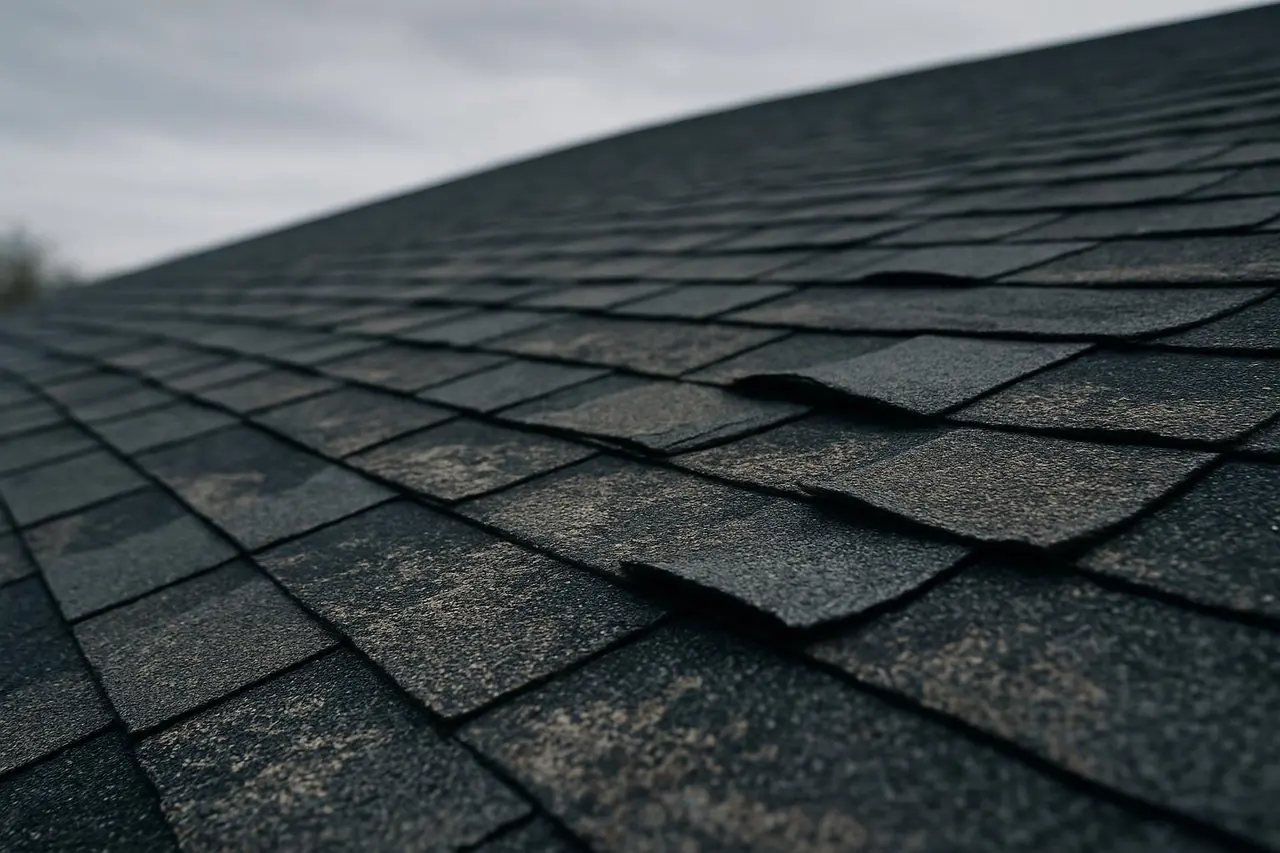
Ask the roofer to describe each slope and to mark which damage looks new and which looks old. The sorter above shows what to photograph for each kind of storm.
Photograph from the ground, in daylight, before anything is moved. Write down the date and the weather. Those notes help you in any conversation, with an insurer or a roofer.
The contractor's own policy is a separate thing
New York now requires a contractor to tell you, before work starts, about any property or casualty policy covering the job, with the insurer's phone and address. That disclosure is about the contractor's policy, and it is separate from your homeowner's policy. Ask for it in writing.
Questions to put to your insurer, in order
- Does my policy pay for roofs at actual cash value or replacement cost?
- How does it count the age of my roof?
- Which perils on my form apply to a roof?
- What documents do you need from me and from a roofer?
- How do you treat small claims in a short span?
Note each answer beside its question, with the date and who gave it. That sheet is your reference if the roofer or the insurer later says something different.
Talking to your insurer the first time
Call with your policy number, your photos and your dates in front of you. Say what you saw and when, and ask what happens next. Ask the representative to tell you which documents are needed and by when, and ask for the reference number of the call.
You can ask questions without filing anything. If you decide to file, you will know what to expect, and if you decide to wait, you will know your options.
Why the order of calls matters
Either order works, as long as you keep notes and sign nothing in a hurry. If a roofer asks you to sign something that gives them rights over your claim, ask your insurer what it means before you sign.
Ask each person to put their answer in writing, and read it with your policy beside you.
Before you sign anything
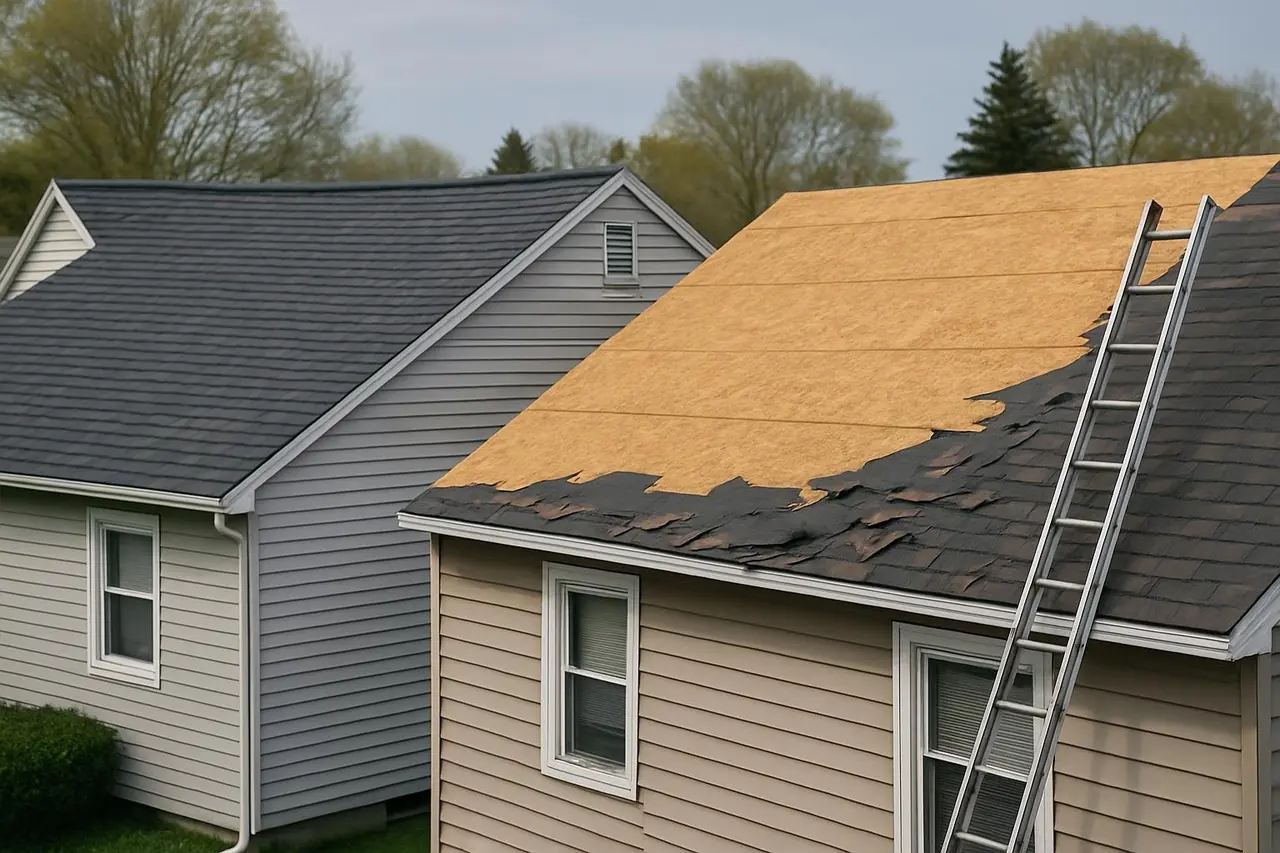
Whatever your insurer says, read the roofer's contract before you pay. It must be written and signed, and it must carry a notice that you can cancel for three business days. The Attorney General advises against a cash deposit before you sign, so ask where any deposit will be held.
Take your time. A decision about a roof does not have to be made at the door. The contractor-checks guide lists the public checks, and you can run them before you answer anyone.
Next
Jobs that follow from this guide
Storm Damage Roofing
What the storm did, before you buy more roof
Roof Repair
A section repair, priced before a replacement
Ask what the storm did, then read your policy.