Storm damage in Clay
Ice storm, wind or tree damage to a Clay, NY roof: find out what happened before you buy a roof
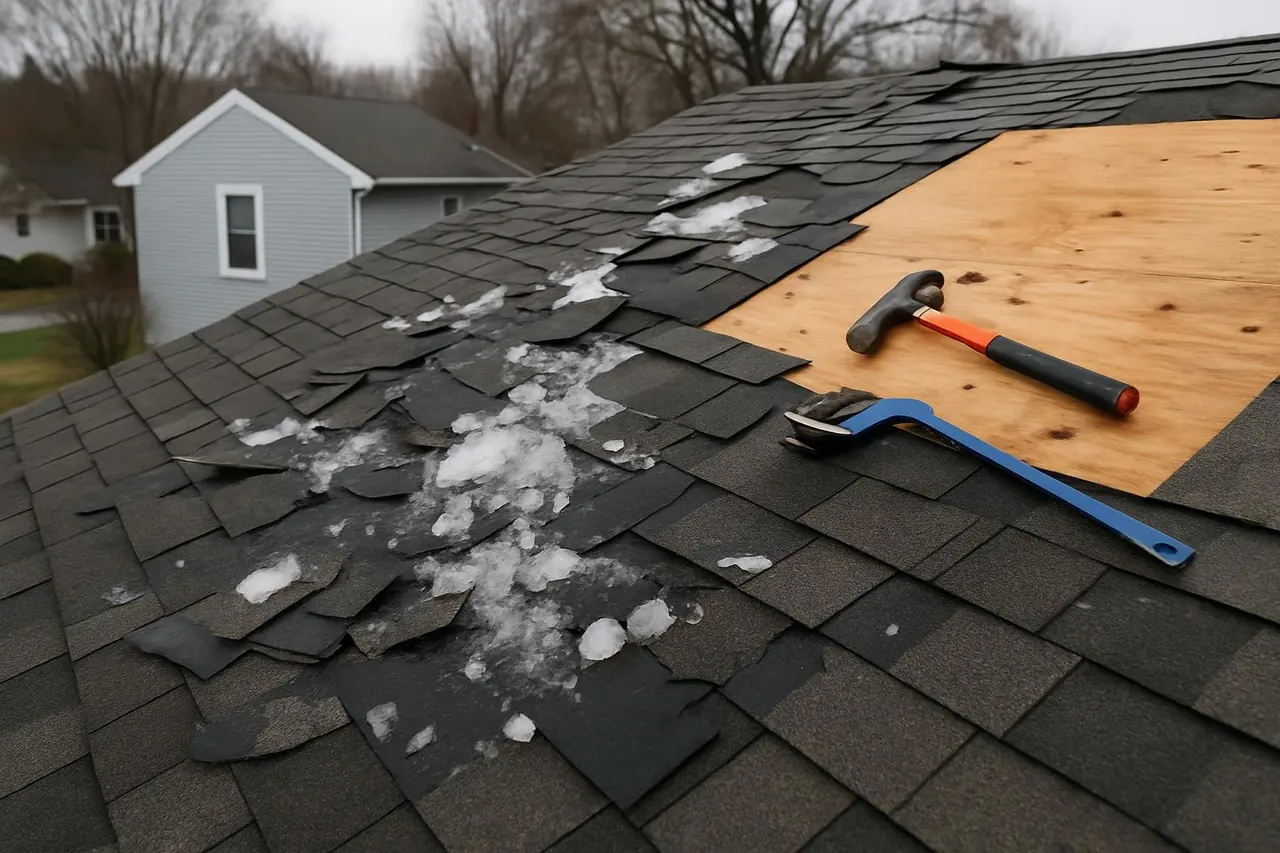
After an ice storm or a gust the roof can look fine from the street and be damaged where you cannot see it. Tell us what came down and an independent roofer will look and write what the storm did.
What we do
Describe the roof in a few lines, and an independent roofing contractor comes out to look at it, then prices the work for you in writing.
What we promise while you decide
- No charge from us, whether you book or not.
- The roofer's price comes to you on paper first.
- You may ask for a repair price beside the replacement one.
- Credit terms are spelled out on our Terms page.
Workmanship and contract terms belong to the roofer you hire.
Signed Roof Replacement Syracuse, (315) 640-3590
Read the full termsQuestions
What Clay owners ask about storm damage roofing
Does an ice storm damage a roof?
It can, mostly through weight and falling limbs. The roof surface may be fine while a limb cracked the deck, so ask a roofer to look at the boards where anything landed.
Should I knock the ice off my roof?
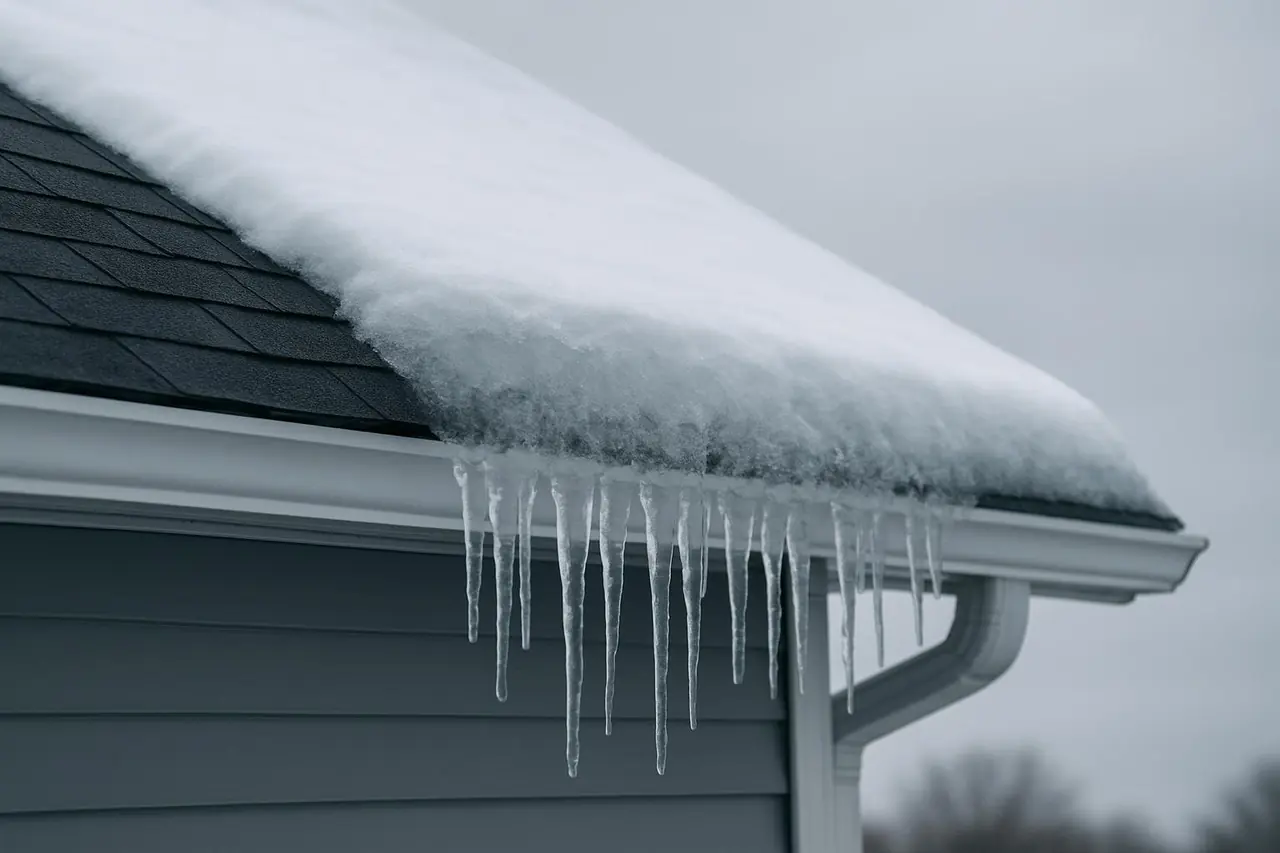
Leave the ice alone and keep off the roof. Chipping can break shingles, so ask a roofer first.
How do I document wind damage?
Photograph the ridge, the edges and any creased tabs with the date, and keep shingle pieces from the yard. Tell the roofer which slope they came from.
Can you tell me what my insurance pays?
No. We do not handle claims. Your insurer tells you what the policy pays, and the roofer's written description of the damage is what you bring to it.
What the county record says about ice storms in Clay
NOAA records seven ice storms for the Onondaga zone between 1999 and 2007 and none from 2008 on, and the April 2003 storm carries about $7 million of property damage countywide. The Clay section of the hazard plan describes ice-loaded trees falling on houses, vehicles and power lines. Those are records for the county and a plan. They do not say what happened on your roof.
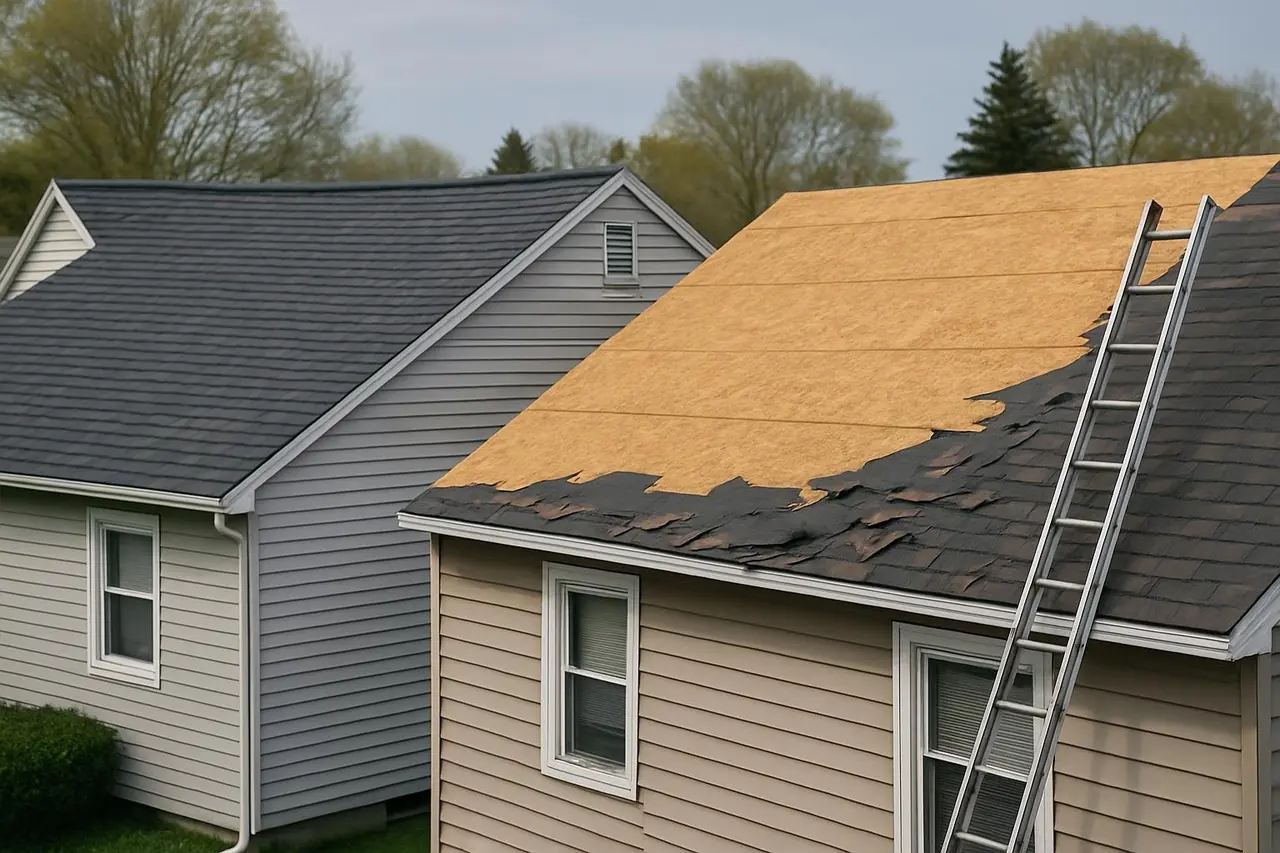
What they do say is that Clay has a reason to expect ice and tree damage. If a storm has coated the trees over your house, think about what could come down onto the roof before you worry about the shingles.
After the ice is gone, walk the property and look up. Note broken limbs still hanging over the house, and tell the roofer.
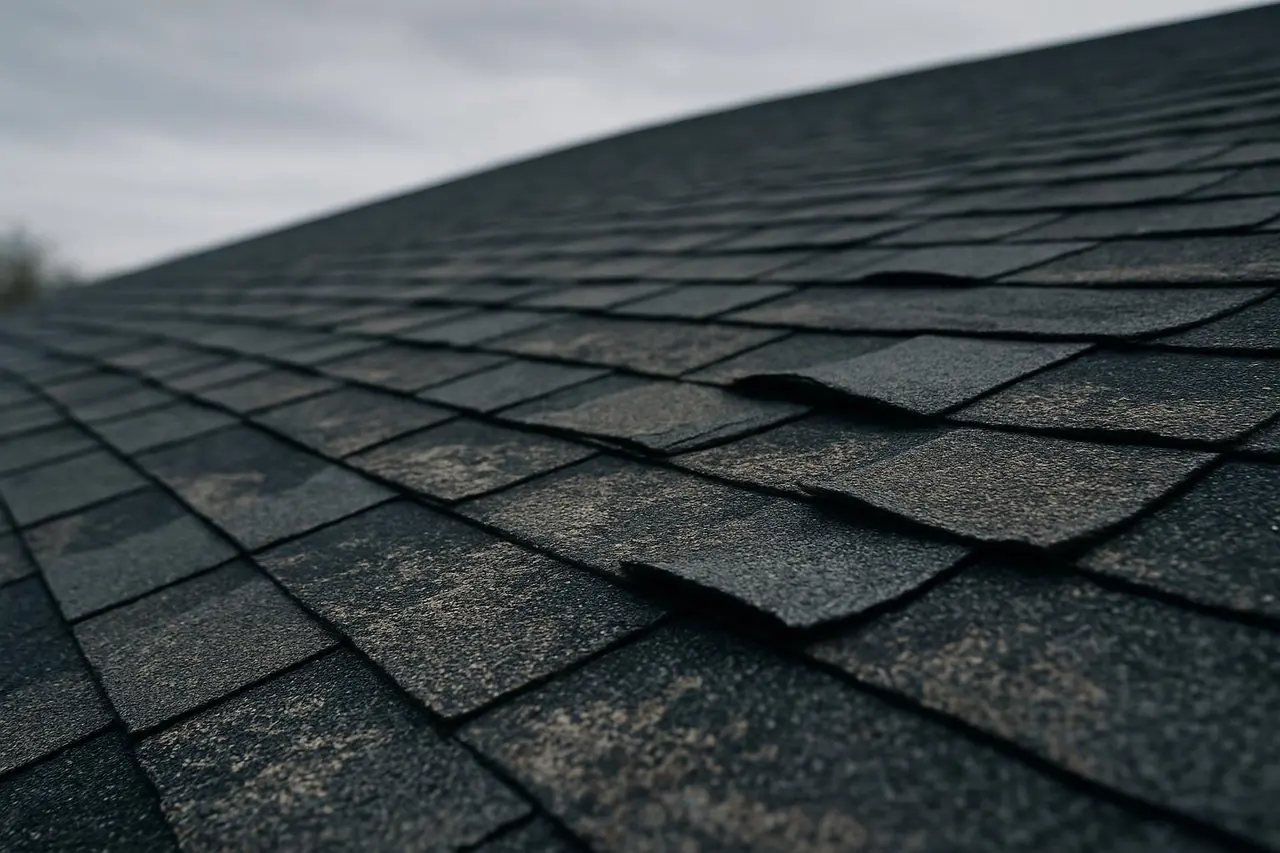
Ice leaves its own marks. Look for shingle pieces along the fence line, for bent or hanging metal trim, and for a sag along a ridge that was straight last month. None of these proves a failed roof, and none should be ignored. Photograph them, note the date and mention them when you book.
The storm sorter
What did the storm do?
Wind
You are herePhotographEach slope and the yard, from the ground.
AskIs this a section repair or a new slope?
Hail
PhotographDents on metal, bruised tabs, any hailstones.
AskWhat do you see on each slope, in writing?
Ice storm
PhotographThe eave edge and any broken limbs.
AskDid the ice hurt the eave detail or only the shingles?
Limb on the roof
PhotographThe limb, and the spot under it.
AskWhat is under the spot where it landed?
Wind checks for a Clay roof after a gust
Gusts that lift shingles are not rare here: NOAA counts 343 thunderstorm wind events in the county record, 1996 through 2025. That is a county count, not a finding about your roof.
The check after wind is simple. Look at the ridge, the edges and the corners, where wind gets under shingles first. Look for creased tabs and for pieces on the ground. Count what you find and tell the roofer, who can then start at the likely slope.
A few lifted shingles are a repair. A slope with creased tabs across it is a different matter, and the roofer should say which one you have and show you in a photograph.
Roof, policy and paperwork after a Clay storm
If you plan to claim, read your policy before you phone anyone. New York's financial services department uses a roof in its worked example to show how depreciation shrinks a payout, and how a home covered at 80 percent of replacement cost or more is treated. We do not handle claims and cannot say what any policy pays, so ask your insurer.
What a roofer can do is describe the damage in plain words, by slope, and put it in the estimate. Keep that description with your dated photographs. If your insurer is sending an adjuster, have both ready to hand over, and ask the adjuster what else they need.
Ask the roofer for the workers' compensation coverage and check it in the state's public search, and make sure the contract is written. If someone offers a quick deal at the door, take the paper and say you will call back.
Think about the order of work. Keep people clear of the damage first, then document, then call. A tarp over an open section is a sensible stop-gap, and it should go on after your photographs are taken, not before. Ask the roofer whether the cover is part of the visit or a separate line, and keep what you were told in writing.
Clay's median home dates to 1978, and a roof from that era may already be on its second covering. If the storm damage sits on a roof with two layers, the replacement question changes, because state code does not let a new covering go over two. Tell the roofer what you know of earlier roofs so the estimate starts from the right place.
Tell-tales
Signs on a Clay roof that lean toward storm damage roofing
| What you see | What it may point to |
|---|---|
| A tree or limb touching the roof | Photograph it before it is cut. Ask a roofer to check the deck under it for cracks. |
| Torn or creased shingles after a gust | Wind creases the tab and tears it at the nails. Look at the ridge and the edges first. |
| Ice stuck on the roof after an ice storm | Leave it alone and keep off the roof. Ask a roofer what the weight did once it has gone. |
| Debris in the yard from your own roof | Pieces of shingle in the grass tell you which slope to point the roofer toward. |
Other jobs
Related roof jobs in Clay
Roof Replacement
Tear-off, deck wood and eave lines to look for
Roof Repair
A section repair, priced before a replacement
Ice Dam Roofing
The eave detail that decides an ice dam job
Nearby
Storm damage roofing pages for places beside Clay
Tell us what the storm brought down on your Clay roof.