Guide
A stain, a lifted tab, a flagged roof: which one do you have?
You can answer most of the repair-or-replace question from your own yard before anyone prices a thing. When does it show, how many layers are there, what is the wood like, and how widespread is the wear? This guide walks the four questions, then tells you how to ask a roofer for both prices on one page.
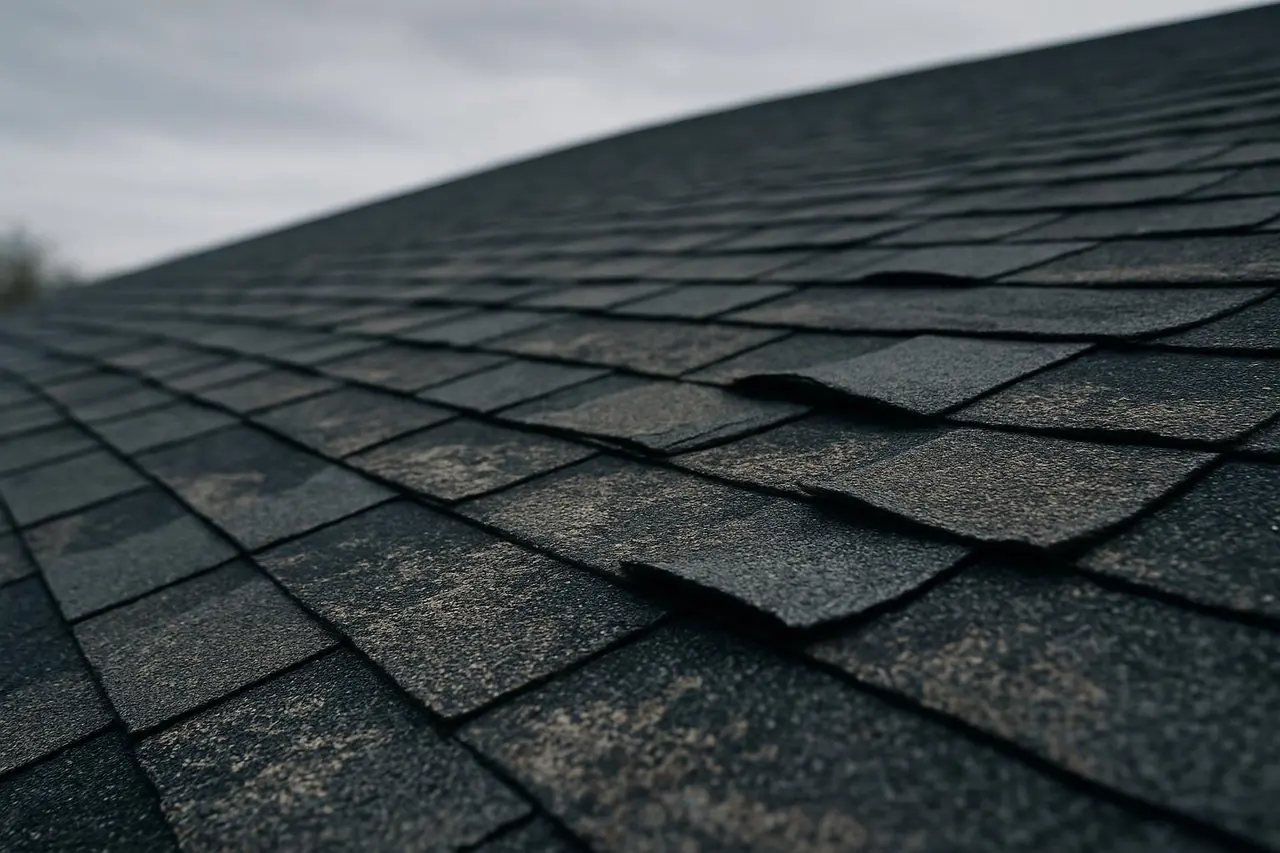
Start with when it shows, not how old it is
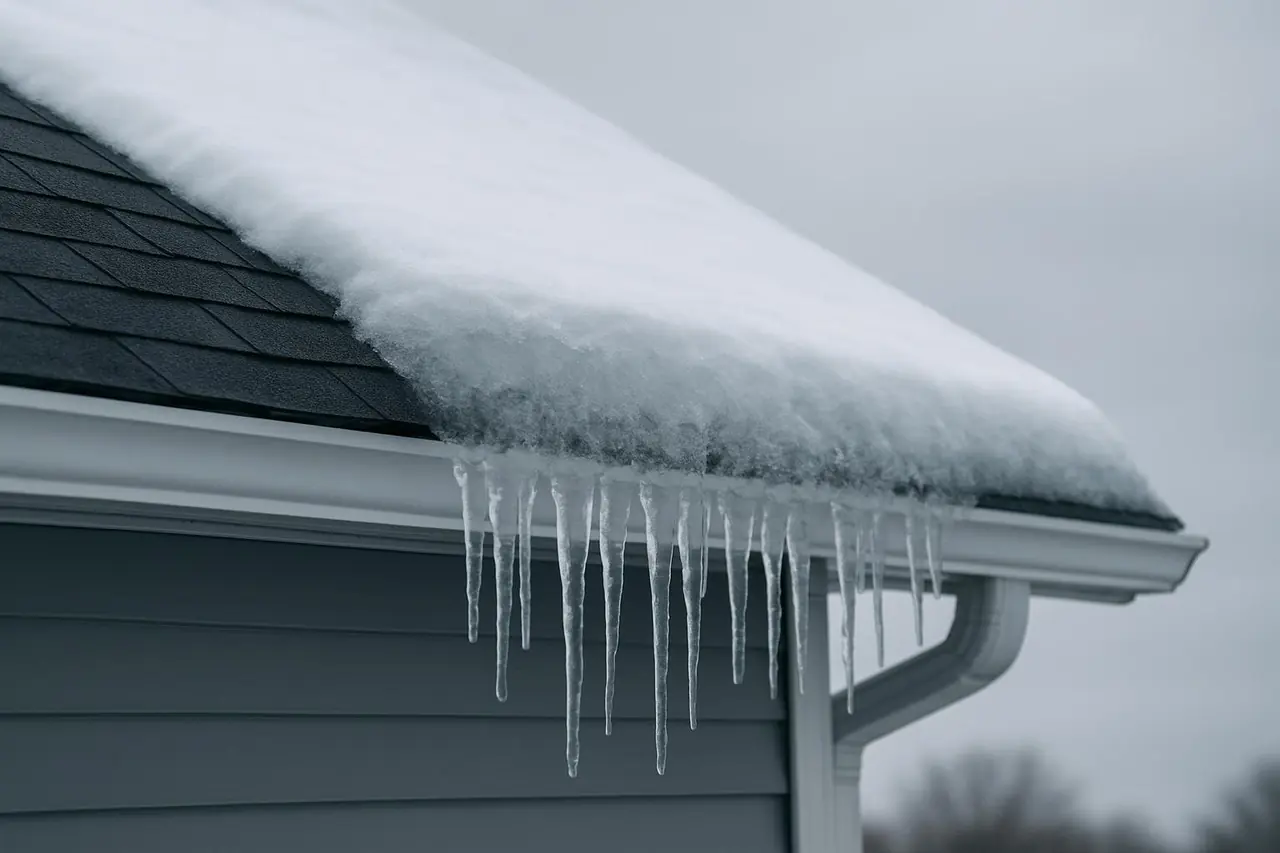
Think back to the first time you noticed it. A stain that appears only while snow melts points at the eave. A stain in every rain is a different pattern, so tell the roofer which one you have. Shingles in the yard after a wind point at storm damage, and a roof with no stain but a worn look is a question about wear.
The four panels above put each timing next to what to check from the ground and the one question to ask. Pick the panel that matches you, then read the matching service page. Write down the dates before the visit, because the roofer will ask.
Question one: how many layers are there?
The code bars a roof recover where there are already two or more coverings. It also bars a recover on a roof that is soaked through or too worn to carry a new layer. So if your roof already has two layers, a third is not an option, and a full tear-off is the honest answer.
You cannot count layers from the ground with confidence. Ask the roofer to count them at an edge during the visit, and to write the number into the estimate. Do not climb up to check.
The decision
When does it show?
Only in a thaw
Check firstNote which wall edge stains, and the dates.
AskIs this the eave only, or the whole roof?
In every rain
Check firstNote whether it grows only after hard rain.
AskWhat did you find, and where?
After a wind or storm
Check firstScan from the yard for shingles on the ground.
AskIs this a section repair or a full slope?
No leak, old roof
Check firstLook for bare patches and curled tabs from the ground.
AskWhat would tell you this roof has years left?
Question two: what is the deck like?
The deck is the wood under the shingles. If the edge has been wet for years, it may be soft, and soft wood cannot hold a nail. A roofer can often judge it at a bare edge, but the full answer comes when the old roof is off.
That is why you ask for a price per sheet or board up front. If the deck is sound, a repair can hold. If it is not, a patch on top buys little. Put the question to the roofer in those words and write down the reply.
Question three: how far does the wear spread?
A few lifted tabs or one bare patch is a section. Bare or curled shingles across a whole slope is a different job. The NIST research on shingle durability says freeze-thaw, heat, sunlight, wind and hail can weaken shingles over time, so ask the roofer whether the shingles beside the damage are still sound.
Photograph each slope from the yard in daylight. Compare the slopes, because wear is rarely even. A roofer who can point to a slope and say why it is worse is giving you the information you need.
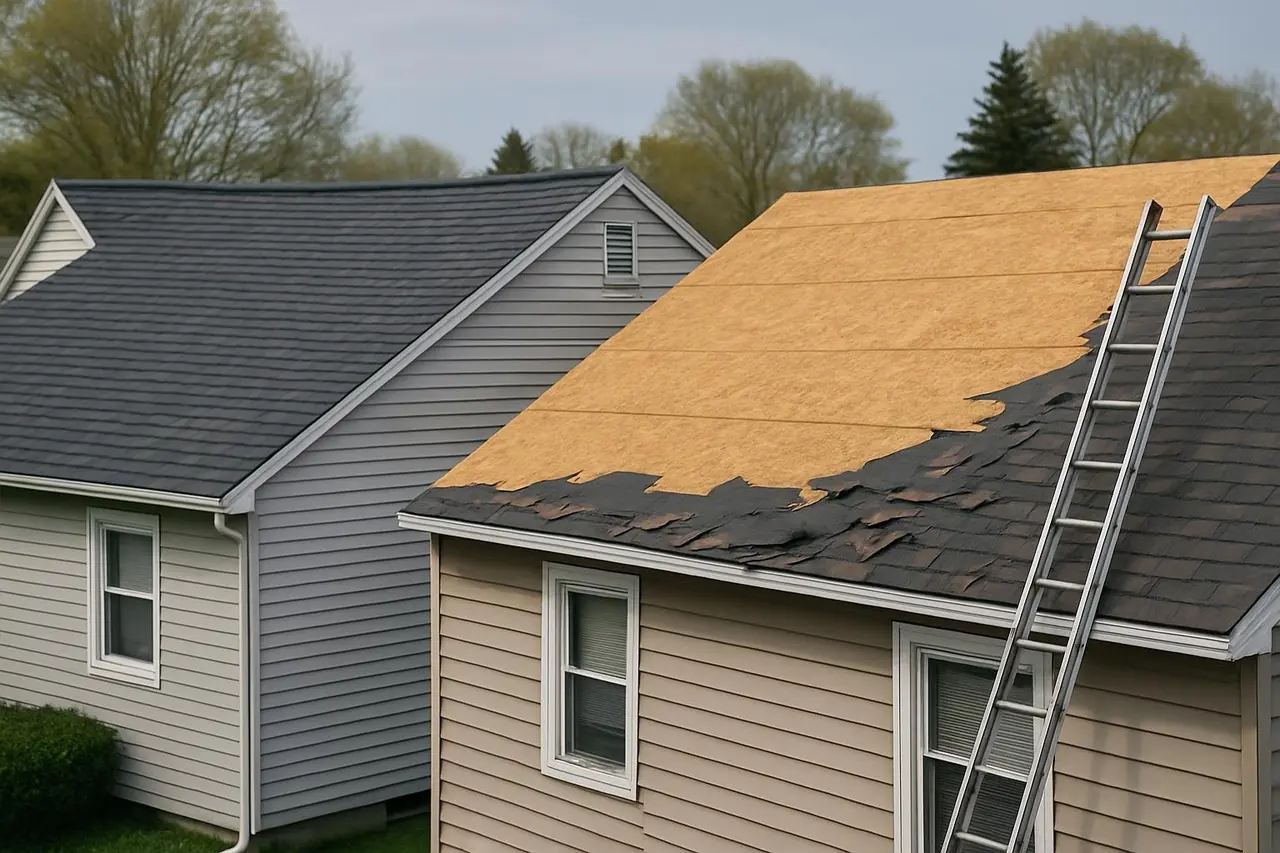
Question four: what would each choice cost, on one page?
You may ask for a repair price beside the replacement one, and a good roofer will give both. Ask for them on the same page, with the repair named by area and the replacement named by layers, deck, eave and permit. The gap between them tells you how much roof the roofer thinks you need.
If you get only one number and a reason to decide fast, say what you saw and ask why that number is the right one. Hold the paper until you have read it against the checks on our replacement page.
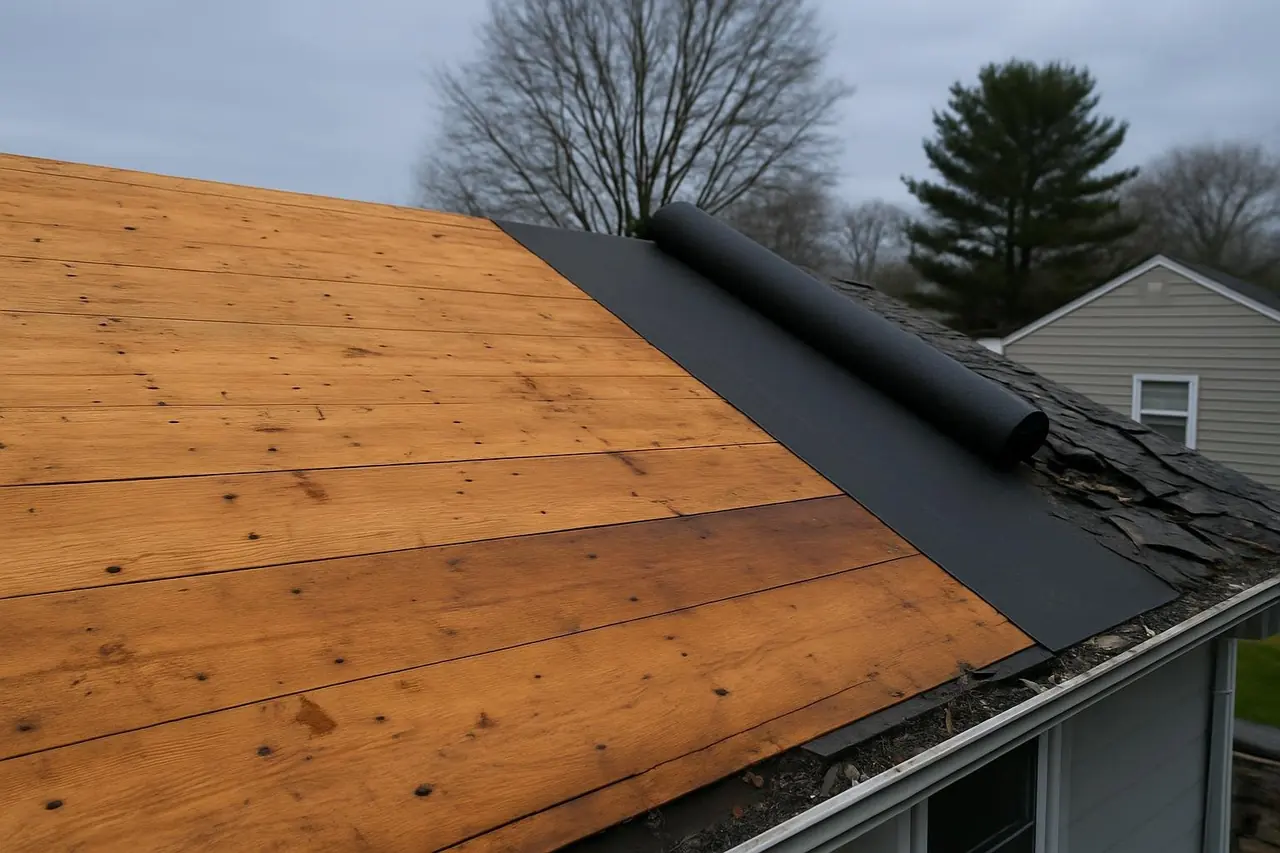
Age as a planning number
Federal housing guidance lists 20 years for asphalt shingles, and the state's insurance guide assumes 25 years in one depreciation example. Both are planning figures. Neither is a test of your roof, and neither tells you what the wood under it is like.
Use age to know when to look, not when to buy. A roof near the end of that range deserves a visit. A roof past it with a sound deck and tight shingles may deserve a repair and a second look next spring.
When a replacement is the right call
A replacement makes sense when there are two or more layers, when the deck is soft in many places, or when the wear covers most of the slopes. It also makes sense when the repair price is close to the replacement price, and the roofer can say why. In each case ask the roofer to name tear-off to the deck, the ice barrier and the drip edge.
What each estimate should name
A repair estimate names the area in plain words, such as the lower third of the north slope, and says what comes off, what goes on and whether deck wood is in the price. A replacement estimate names the tear-off to the deck, how many layers come off, the ice barrier and drip edge, the underlayment, the deck repair rate and who files the permit.
Lay the two side by side. The difference should be clear enough to explain to a neighbor. If it is not, ask the roofer for a clearer version.
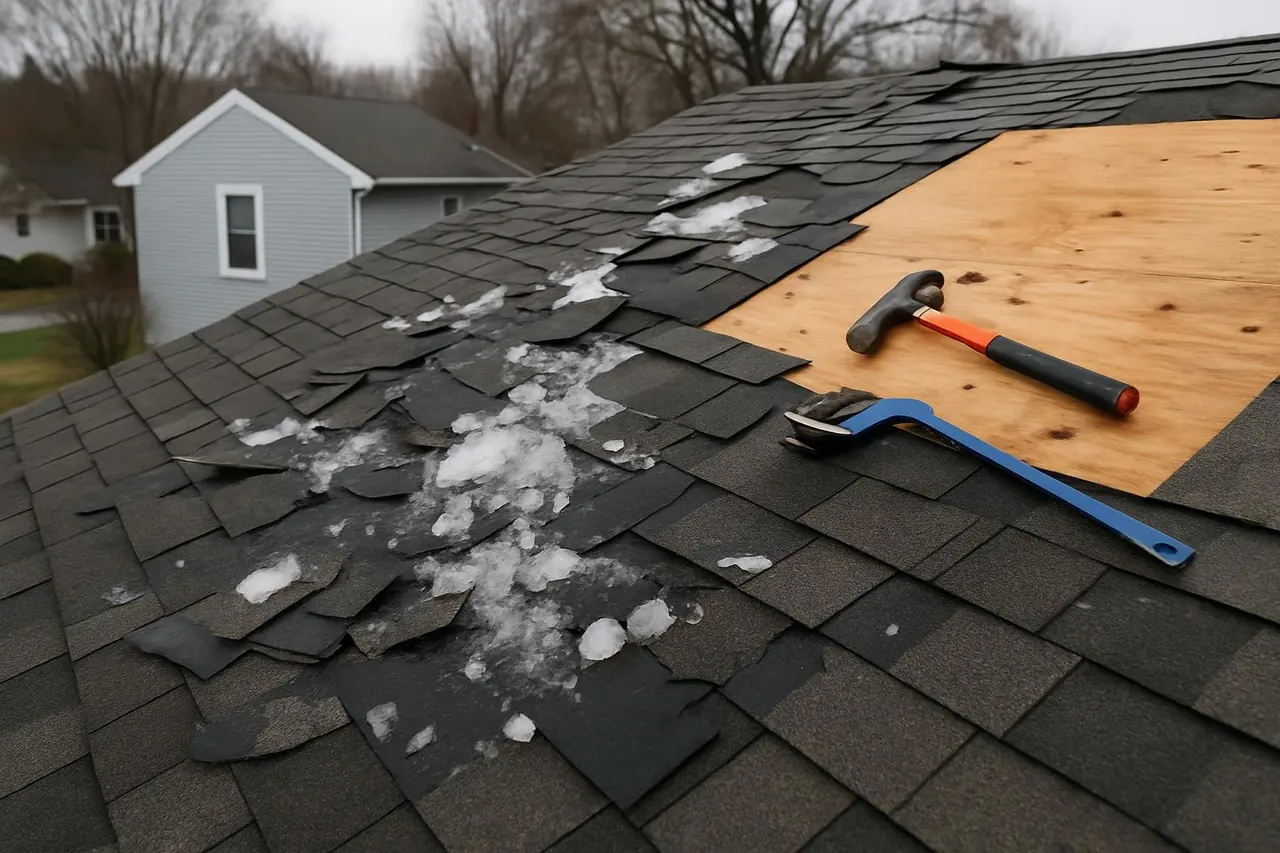
What the house's age can and cannot tell you
The median home in Onondaga County dates from 1964, and 22.6 percent went up before 1940. Housing of that age commonly has had its roof replaced at least once. That is a proxy for the whole county, not a fact about your roof.
Use it as a reason to ask the roofer to count layers and look at the deck. Do not use it to guess. Your own roof may be newer or older than the houses around it.
Questions to ask at the visit
Ask the roofer to show you what they are seeing, from the ground or on a phone photo. Ask which part of the roof worries them most and why. Ask what they would do if it were their own house, and what they would watch for over the next winter.
Then ask for the repair price and the replacement price in writing, with each scope named. Take a day. If the roofer presses you to decide on the spot, say you will read it first and call back tomorrow.
When the repair is the better first step
If the damage is one slope or one edge, the deck is sound and the rest of the shingles are tight, a repair can be the sensible choice. It lets you spend less now and watch the roof through a winter. Ask the roofer to say what they would look for next spring, so you know when to call again.
If you choose a repair, ask for it in writing with the area named, and keep the replacement estimate in your folder. Having both on paper means you can compare them again without starting over.
If two roofers disagree
Two roofers can look at the same roof and give you different answers. Ask each to tell you what they saw and what it would take to change their mind. If one counts two layers and the other counts one, ask both to count again at an edge. The disagreement usually narrows to a single fact, and you can settle it.
When a buyer's inspector flagged the roof
A note from an inspector during a sale is a reason to ask a roofer, not a verdict. Tell the roofer what the note said, for example two layers or a soft spot near the chimney, and when the closing is. Ask what the roofer sees, what a sound fix would include and what the repair price would be beside a full one. You can then take both numbers back to the table.
Ask the roofer which office issues the permit at your address, and check it with the permits guide. Then send us your address and ask for a visit.
Next
Jobs that follow from this guide
Roof Repair
A section repair, priced before a replacement
Roof Replacement
Tear-off, deck wood and eave lines to look for
Ask for the repair and replacement prices.